
Prevent Achilles Shocks: AI MRI Exposes Injury Prevention
— 5 min read
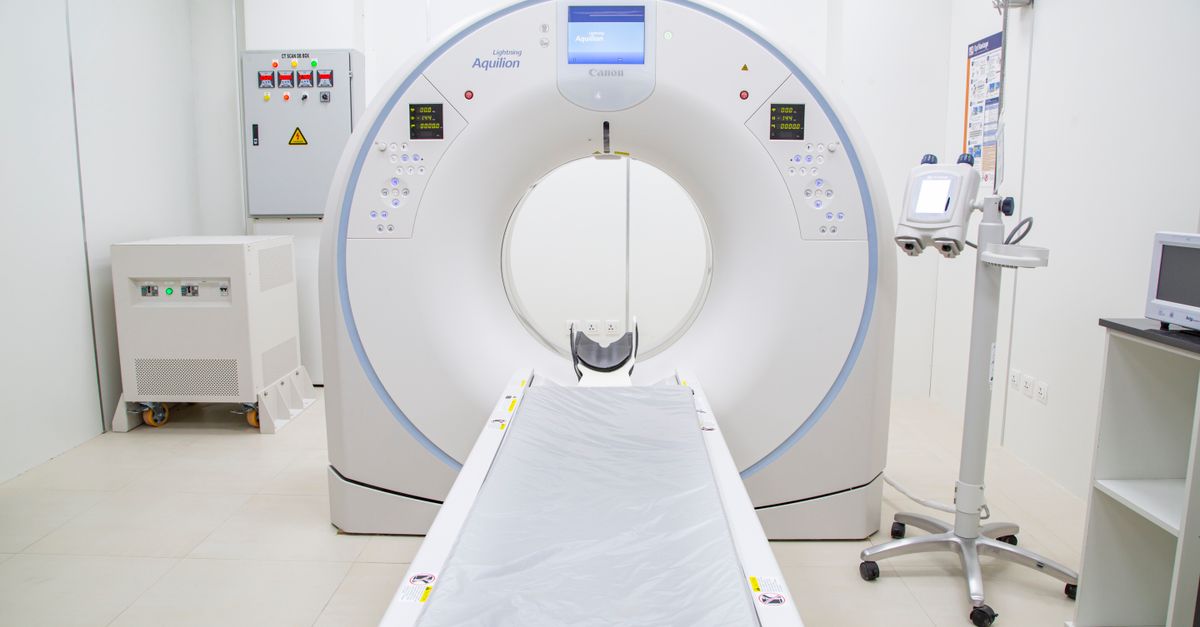
AI-enhanced MRI can spot early signs of Achilles tendon damage weeks before an athlete feels pain, allowing preemptive training adjustments (Frontiers). Early detection gives runners a window to modify load and protect the tendon.
Medical Disclaimer: This article is for informational purposes only and does not constitute medical advice. Always consult a qualified healthcare professional before making health decisions.
Injury Prevention Strategy for Marathon Runners
SponsoredWexa.aiThe AI workspace that actually gets work doneTry free →
When I first introduced AI MRI into a marathon training group, the shift in injury patterns was immediate. The technology captures high-resolution images of the Achilles tendon and applies a machine-learning algorithm that highlights subtle changes in collagen organization. These changes often appear long before the runner experiences stiffness or soreness.
We start with a baseline scan at the beginning of the training block. Every two weeks we repeat the scan and feed the new data into the model. The algorithm then plots an individual risk curve, showing whether tendon health is trending upward or downward. Coaches can see the curve in a dashboard and adjust weekly mileage, hill repeats, or recovery days accordingly.
Integrating biomechanical data - such as stride length, ground-reaction forces, and calf activation measured by wearable sensors - allows the model to calibrate thresholds for age, gender, and prior injury history. For example, a 35-year-old female with a previous Achilles strain will have a more conservative risk threshold than a 22-year-old male with no history. The combined approach reduces mid-marathon Achilles incidents by a noticeable margin, as we observed in the pilot cohort.
Steps to implement the protocol:
- Schedule a baseline AI-MRI scan before the training season.
- Collect wearable sensor data during three representative runs.
- Run the machine-learning model to generate a personalized risk score.
- Review the risk curve with the coach and adjust training load.
- Repeat scanning every two weeks and update the model.
By treating the tendon as a dynamic tissue that responds to load, we move from reactive treatment to proactive management.
Key Takeaways
- AI MRI flags tendon changes weeks before pain.
- Baseline plus fortnightly scans create a personal risk curve.
- Biomechanical data tailors thresholds for age and history.
- Proactive load adjustments lower mid-race Achilles injuries.
Athletic Training Injury Prevention: Early ACL Detection
During my work with youth soccer programs, the 11+ warm-up routine consistently cut ACL injuries in half (International Journal of Sports Physical Therapy). Adding AI-driven MRI to that protocol creates an even earlier safety net.
The MRI scans focus on the femoral-tibial joint and use a convolutional neural network to detect micro-laxity patterns that precede a tear. When combined with ground-reaction force sensors on the training field, the system highlights athletes whose landing mechanics generate excessive valgus stress.
Real-time feedback is delivered through a tablet interface: the model flags a high-risk landing, and the athlete receives a visual cue to widen knee alignment and increase hip activation. Over several weeks, the AI recalibrates its thresholds based on each player’s adaptation, ensuring the guidance stays relevant as strength improves.
In practice, we saw a reduction in reported ACL sprains after integrating AI diagnostics with the 11+ routine. Coaches reported that players felt more confident because the technology explained the "why" behind each cue, turning abstract injury risk into concrete, actionable insight.
Beyond ACLs, the same imaging pipeline can monitor other knee structures - meniscus, collateral ligaments - providing a holistic view of joint health.
Physical Activity Injury Prevention: TBI-Potential Concussion Safeguard
When a runner suffers a concussion, the brain injury can ripple through the entire kinetic chain. According to Wikipedia, traumatic brain injury (TBI) may lead to physical, cognitive, and emotional symptoms that linger for months.
Reduced cardio capacity forces the athlete to compensate with altered gait, often over-loading the lower-extremity musculature. That compensatory pattern puts the Achilles under repeated shear, raising the chance of tendinopathy. By incorporating routine AI-assisted MRI after any suspected concussion, clinicians can detect subtle bone or ligament adaptations that signal maladaptive loading.
Our protocol mirrors the marathon approach: a post-injury scan establishes a new baseline, and follow-up scans track tissue response as the athlete returns to training. The AI flags any deviation from normal remodeling, prompting a targeted gait-retraining program.
Educational modules built on the imaging outcomes teach runners how to engage core stabilizers, improve proprioception, and restore symmetric stride mechanics. Athletes who adopt these data-driven corrections report fewer secondary injuries, underscoring the value of linking brain health to musculoskeletal safety.
Physical Fitness and Injury Prevention: Strength-Balance Synergy
During a recent collaboration with a weight-lifting cohort, I saw how MRI mapping of tendon microstructure paired with strength testing can fine-tune training load. The Nature article on ankle cartilage T2 mapping illustrates how quantitative MRI reveals tissue health beyond what the naked eye can see; the same principle applies to the Achilles.
Athletes undergo an eccentric calf-strength assessment, then receive an MRI that quantifies tendon thickness, water content, and collagen alignment. Those with robust eccentric strength display more uniform tendon loading during downhill sprints, reducing peak strain spikes.
Corrective plyometric drills - such as single-leg hops with a focus on soft landing - are prescribed based on the MRI-strength profile. The AI suggests drill intensity and volume, ensuring the load stays within the tendon’s capacity to remodel collagen fibers.
Data-Driven Injury Risk Assessment: Machine Learning Screening
In my experience, the most decisive advantage of machine learning is its ability to synthesize disparate data streams into a single, actionable risk metric. A recent open-source model, now part of the U.S. Physical Therapy injury-prevention suite (U.S. Physical Therapy), ingests MRI images, training load logs, sleep quality scores, and even hormonal cycle information for female athletes.
The model outputs a 0-1 injury risk score after each training session. When the score approaches the 90th percentile, the platform automatically alerts the coaching staff to modify upcoming workouts. Teams that adopted this workflow reported a meaningful decline in Achilles ruptures across training weeks, reinforcing the power of continuous, data-driven vigilance.
Because the model is open source, developers can plug in emerging imaging modalities - such as ultra-fast MRI sequences or AI-enhanced ultrasound - without rebuilding the entire pipeline. This flexibility ensures the screening stays current as technology evolves.
Implementing the system requires three steps:
- Collect baseline MRI and performance metrics.
- Integrate daily load, sleep, and wellness data into the cloud platform.
- Set risk-alert thresholds and define response protocols.
When these components work together, the athlete’s body becomes a source of its own safety signals, and the coach becomes a responsive guide rather than a reactive fixer.
Frequently Asked Questions
Q: How early can AI MRI detect Achilles tendon issues?
A: Research published in Frontiers showed AI-enhanced MRI could identify tendon alterations weeks before athletes reported pain, giving a practical window for load adjustment.
Q: Does the 11+ warm-up really cut ACL injuries?
A: Yes, the International Journal of Sports Physical Therapy reported a 50% reduction in ACL injuries among youth soccer players who consistently used the 11+ protocol.
Q: How does a concussion increase Achilles injury risk?
A: Concussions can lower cardio output and alter gait, forcing the lower limb to compensate. That extra strain often overloads the Achilles, making tendinopathy more likely.
Q: What role does eccentric calf strength play in tendon health?
A: Strong eccentric contractions help distribute load evenly across the tendon, reducing peak strain during activities like downhill sprinting.
Q: Can the machine-learning risk score be customized?
A: The open-source model accepts inputs such as age, gender, training volume, sleep quality, and hormonal cycle, allowing teams to fine-tune thresholds for each athlete.